


Why Index Investors Keep Acting Like Stock Pickers
I have joined several Facebook groups that discuss personal finance. Among them there is a lot of discussion about investing through index ETFs.
Somewhat ironically, there are people in this category who repeatedly ask questions about income or dividend ETFs, technology ETFs, or U.S.-listed ETFs that invest only in the S&P 500 or NASDAQ. I find this odd for a community built around diversification and simplicity. Instead, many discussions focus on narrower and more speculative slices of the market.
To explore this phenomenon, allow me to introduce a representative but fictional character: Greg, a mid-40s enthusiastic DIY investor and active participant in Facebook investing groups.
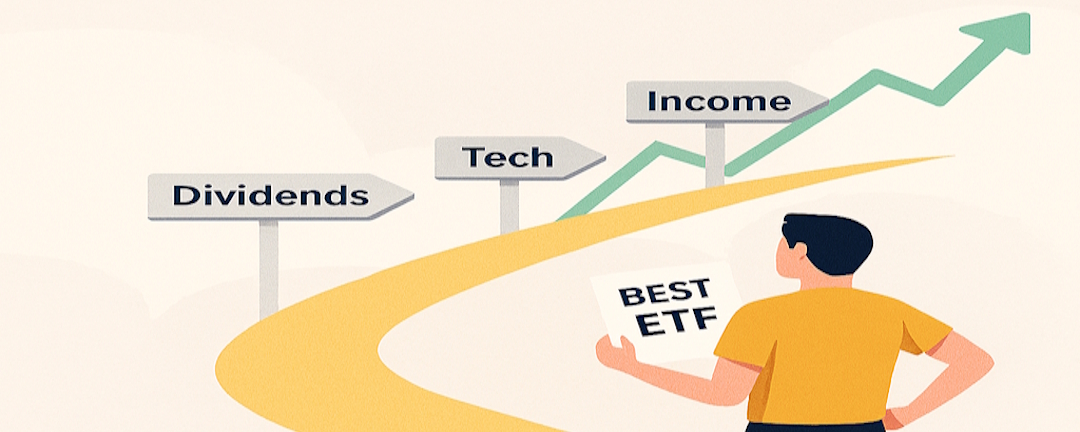
Greg says he believes in indexing, but he is always looking for “the best ETF.” This search has resulted in a mix of dividend ETFs, tech ETFs, and, more recently, a few covered-call funds for income.
The question for me is this: if the point of index investing is to capture global market returns at low cost, why do Greg and so many other investors still try to beat the market using the very tools designed to dissuade them from this temptation?
The Misunderstanding
Greg proudly posts his ETF lineup online, expecting affirmation. He is puzzled when other members gently point out that his portfolio looks more like a collection of sector bets than a diversified index strategy. Among the categories represented are:
- Canadian Dividend & Income Equity
- Commodity (e.g., gold, silver)
- Energy Equity (e.g., oil and gas)
- Financial Services Equity (e.g., major Canadian banks)
- Geographic Equity (e.g., India, Japan)
- Healthcare Equity (e.g., Healthcare, biotechnology)
- Real Estate Investment Trusts (REITs)
- US Equity (e.g., ETFs that track the Dow Jones, S&P 500, and NASDAQ 100)
Analysis
What is going on here? In Greg’s relentless search for the best ETF, he often finds himself chasing either the latest trend or the tried-and-true standard. The ETFs tracking India and Japan represent the trend-following impulse: India as an emerging giant, Japan as a comeback story after its “lost decades.”
The tried-and-true approach shows up in his preference for ETFs that provide visible cash flow: Canadian dividend ETFs, bank-focused funds, and REITs.
For long-term growth, Greg likes U.S. equity ETFs and believes that “the more, the merrier,” even though there is significant overlap between holdings in the Dow Jones Industrial Average, the S&P 500, and the NASDAQ 100. Microsoft, Amgen, Apple, Amazon, and Nvidia appear in all three indices. (Technically, the Dow Jones is an average, not a market-weighted index.)
Greg assumes that ETF equals index and that index automatically equals diversification. That is not necessarily the case.
While ETFs were originally broad-market trackers, today investors can buy ETFs with narrow exposures to specific sectors, factors, dividend strategies, or themes. Some are every bit as actively managed as traditional mutual funds.
In fact, index investing is not about choosing the best ETF; it is about owning the market.
The Realization of Consequences
Greg’s portfolio, built piece by piece, performs inconsistently. He notices heavy concentrations in Canadian financials, energy, and real estate, significant exposure to U.S. technology, and only limited diversification outside North America. On top of that, the taxes from income distributions reveal inefficiencies he had not previously considered.
Analysis
Several psychological and social forces shape Greg’s portfolio:
- Illusion of control: It feels good to take action, so adding a new ETF gives Greg a sense of decisiveness.
- Home-country bias: Familiar names such as banks, energy firms, and real estate trusts feel safer. Even U.S. indices like the Dow, S&P 500, and NASDAQ are comforting because they are constantly referenced in the media.
- Income illusion: Like many Canadians, Greg prefers visible cash flow to total-return efficiency.
- Social reinforcement: Many forums reward the search for “the best dividend ETF” or “the best U.S. equity ETF.” Product selection earns praise, while patience rarely does.
These forces push investors toward narrower categories, a behaviour sometimes called sub-indexing or factor chasing. The result is over-concentration, hidden risk, and reduced portfolio efficiency. In Greg’s case, he ends up spending more on multiple ETFs that collectively do a poorer job than a few broad ones could.
Realizing this, Greg’s confidence falters as he sees the gap between what he thought he was doing and what he is actually doing.
The Discovery of True Index Investing
Searching for a more coherent approach, Greg discovers the concept of the market portfolio, the idea that, in theory, one could own the entire world’s investable assets in proportion to their market weights.
Analysis
Three key theoretical foundations underpin index investing:
- Efficient Market Hypothesis (EMH): Prices reflect all available information. It is exceedingly difficult to gain an edge because everyone has access to the same data at nearly the same time.
- Modern Portfolio Theory (MPT): Diversification maximizes return for a given level of risk. Concentrating a portfolio in narrow market segments increases risk but is unlikely to improve outcomes.
- Bogle’s Insight: John Bogle, founder of Vanguard, popularized the principle “Don’t look for the needle; buy the haystack.” The world’s best analysts cannot consistently beat the market, so rather than searching for winning stocks, buy the whole market at minimal cost. As Bogle often said, “In investing, you get what you don’t pay for.” Even when skill exists, costs usually erode any advantage.
Greg’s earlier approach, selecting ETFs tied to narrow indices, introduced the same kind of idiosyncratic risk found in stock picking.
Instead, he could simplify his life and improve his long-term prospects by holding three or four broad-based index ETFs, or even a single, global asset-allocation ETF. Despite appearing simple, this approach is supported by both academic theory and decades of evidence.
The Joy of Simplicity
Finally understanding the purpose of index investing, Greg consolidates his portfolio into a few broad-based ETFs. He is happy to rebalance only once a year, if needed, to maintain his desired risk level. He realizes how much less time he now spends checking markets, comparing yields, or reading ETF rankings.
Analysis
The freedom of true index investing arises from several advantages:
- Lower costs: Broad-market ETFs have the lowest fees.
- Less overlap: A few well-chosen ETFs can cover the global market with minimal duplication.
- Simpler tax reporting: Broad indices have low turnover.
- Behavioural calm: There is no need to worry about picking the right ETF. You already own the market.
The Resolution and Takeaway
Months later, Greg posts again on Facebook, not to ask which ETF is best, but to thank others for steering him toward a global indexing approach. He no longer tries to beat the market; rather, his returns are the market, minus minimal costs.
Analysis
- Index investing is not about being clever; it is about being consistent.
- This is a good opportunity to audit your own portfolio for hidden bets or unnecessary complexity.
The edge investors have been seeking has been there all along. It does not come from betting on narrow sectors but from embracing simplicity, discipline, and patience.
This is the 302nd blog post for Russ Writes, first published on 2025-11-03.
If you would like to discuss this or other posts, connect on Facebook, Twitter aka X, LinkedIn, Instagram, Mastodon, or Bluesky.
Click here to contact me for an appointment.
Click here and select FinPlan30: Financial Planning in 30 min under Specific Questions for a 30-minute free, no-obligation financial planning conversation.
Disclaimer: This blog post is intended for general information and discussion purposes only. It should not be relied upon for investment, insurance, tax, or legal decisions.
Image by MS Copilot